70 x 7 The Meal XLVI, Diriyah Biennale
Date:
2024
Materials:
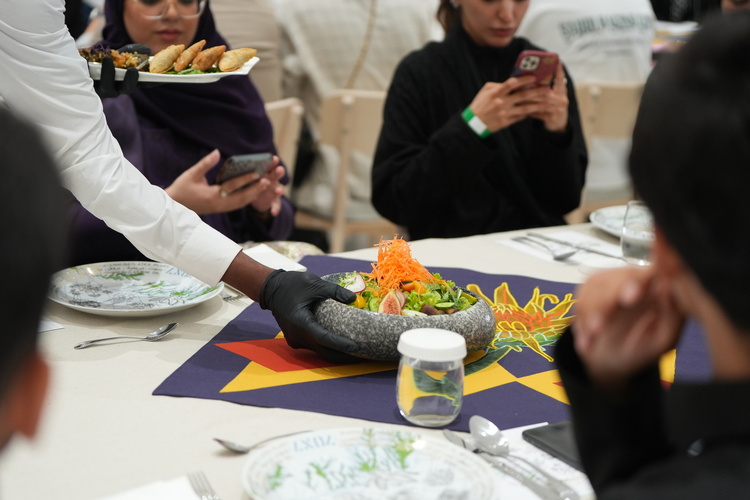
Table setting for 300 guests, Royal Limoges porcelain plates (Ed 300), table centrepieces in canvas, silk-satin embroidered appliqué
Catalogued:
After Rain: 2024 Diriyah Contemporary Art Biennale. Hatje Canz, 2025
Exhibition history:
2024 Diriyah Contemporary Art Biennale, After Rain, Saudi Arabia
Courtesy:
Lucy + Jorge Orta
From biodiversity and environmental themes to the security of food supply chains, '70 x 7 The Meal' brings these conversations to enact dialogue and to empower communities. Taking the form of a meal, each dining experience is actively shaped by participants through workshops and hands-on activities place the importance of food and the rituals which surround as the focus of conversations.
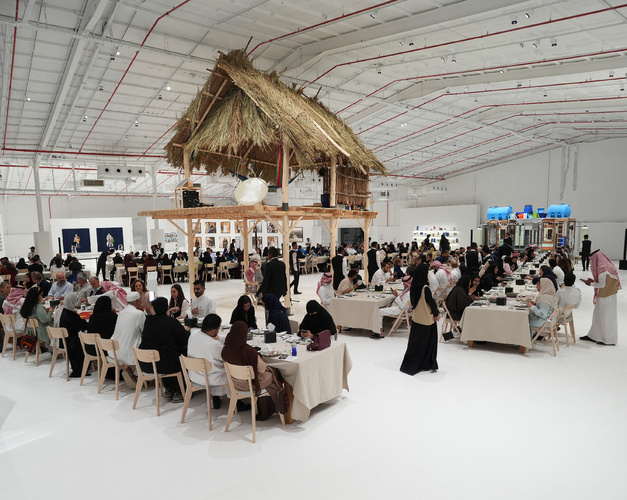
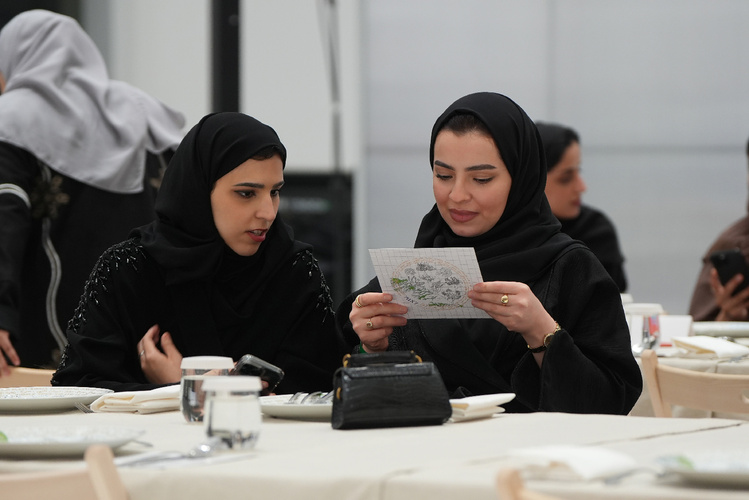
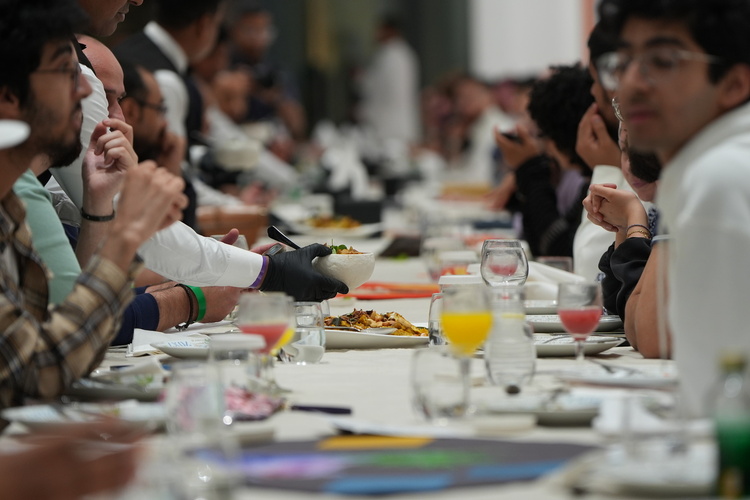
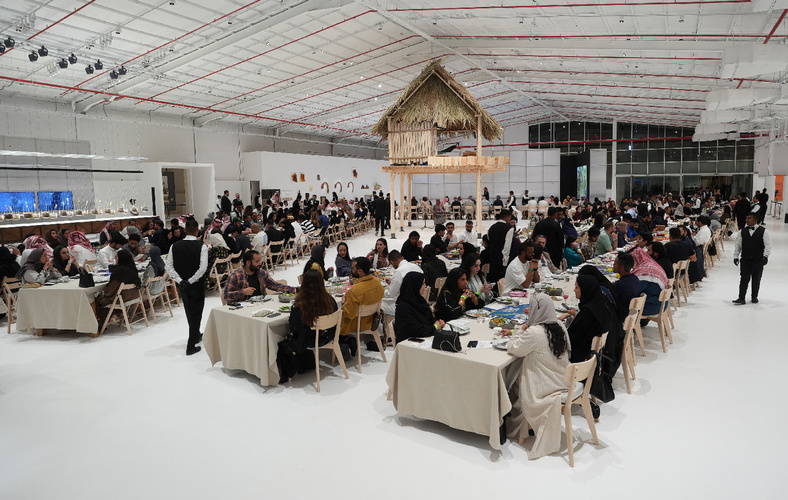
The forty-sixth activation of ’70 x 7 The Meal’ was commissioned by the Diriyah Biennale Foundation for the 2024 Diriyah Contemporary Art Biennale. The meal took the form of a sohour gathering 300 guests for a performative dining experience within the Biennale exhibition, a venue overlooking Wadi Hanifah—a seasonal river valley that threads through the landscape of Diriyah.
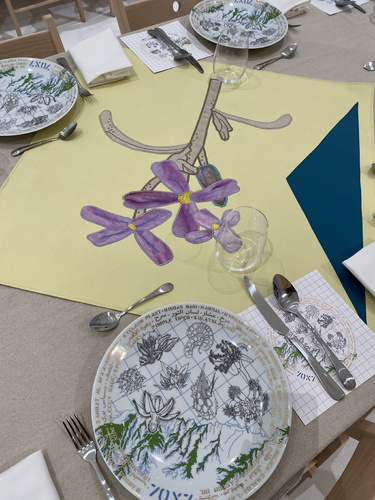
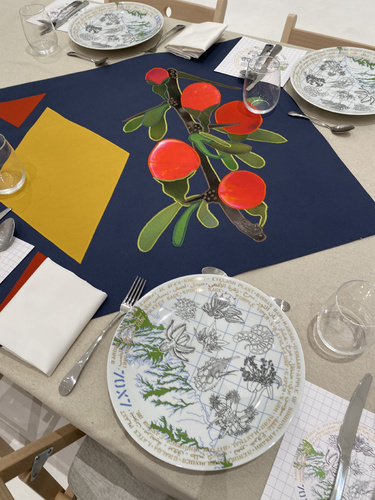
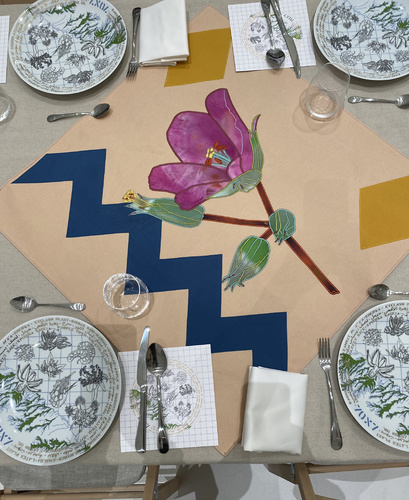
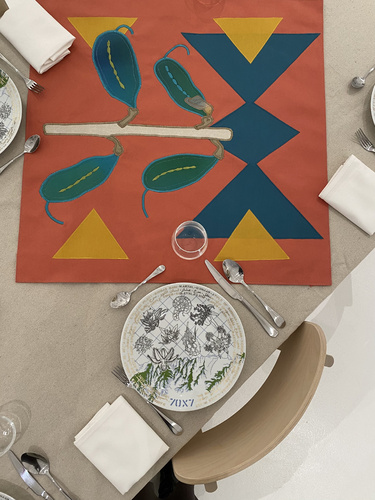
The dining tables were conceived as an immersive installation, adorned with two interrelated artworks that draw from the cultural and ecological context of the valley. Together, they celebrate its fertilty and historic position along the pilgrim caravan route leading to the garden city of Riyadh.
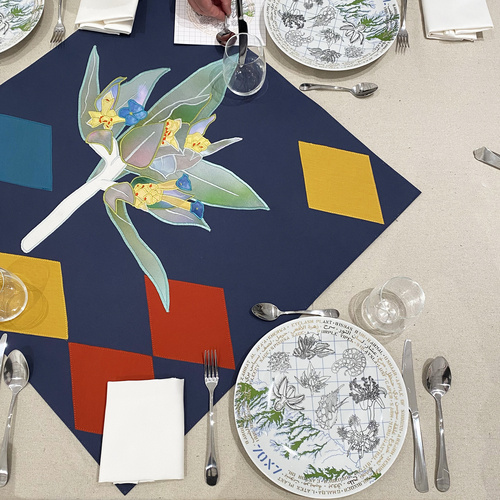
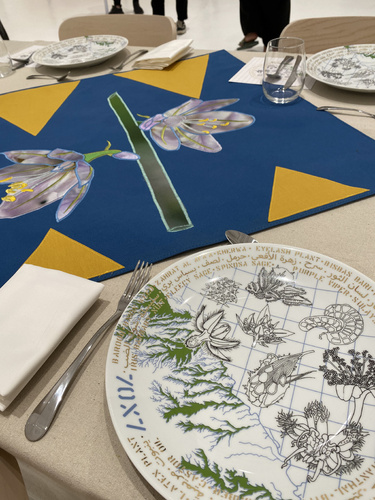
The first of these works comprises forty original table centrepieces titled 'Embroidery Landscapes' depicting a vibrant assemblage of plants and flowers endemic to Wadi Hanifah. Documented by Lucy Orta through photography and drawing during field trips to the wadi—undertaken in collaboration with botanists from the National Centre for Vegetation Cover (NCVC), the species form a newly articulated lexicon of the valley’s flora in textiles. Each of the forty table centrepieces renders a plant or flower in silk appliqué embroidery on brightly coloured canvas. The organic forms are set in dialogue with geometric compositions in appliqué cotton. The abstract shapes evoke the traditional motifs of Al Sadu Bedouin weaving, where lozenges and triangles signify celestial and terrestrial phenomena, the movement of the stars, and the seasonal cycles essential to nomadic life and resilience.
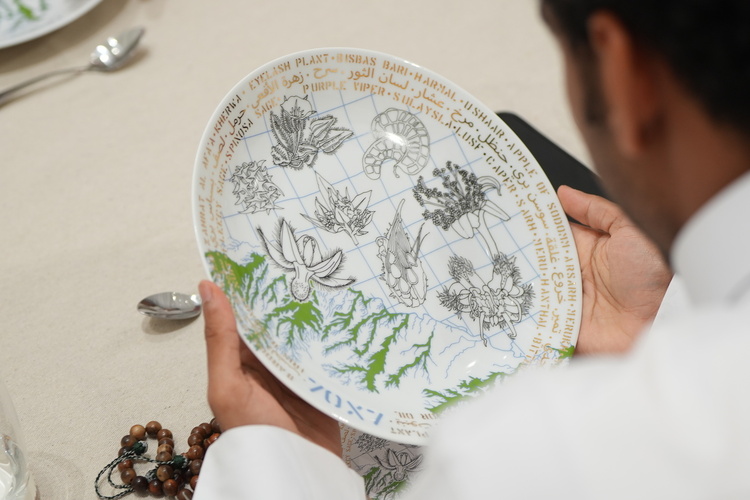
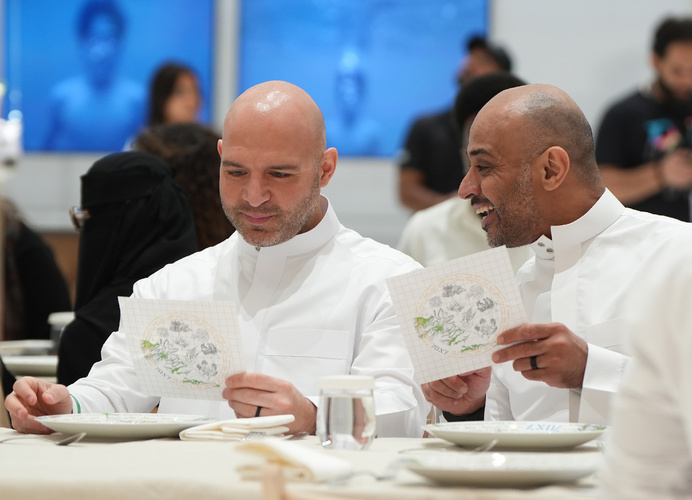
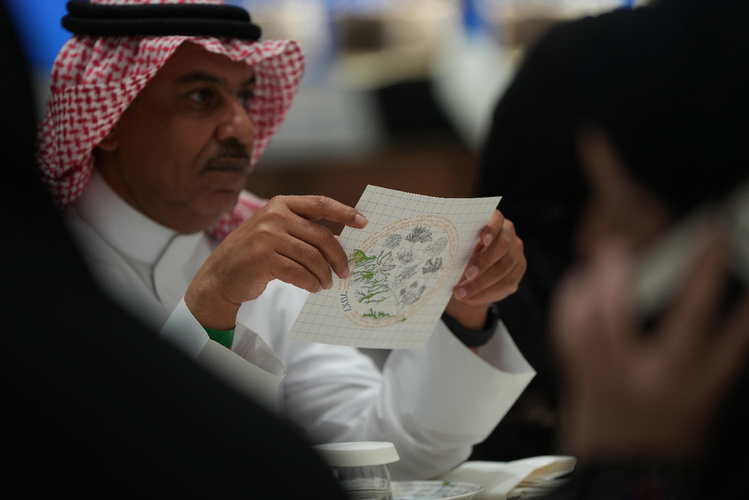
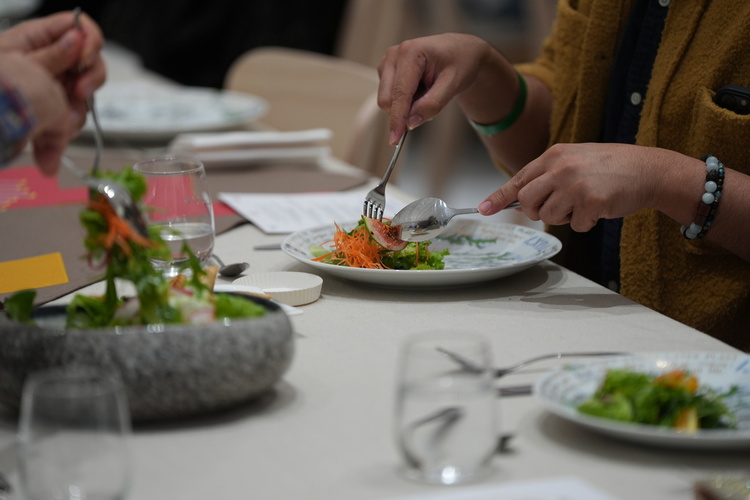
The second artwork takes the form of a limited edition of Royal Limoges porcelain plates (edition of 300). The drawing enamelled on the plate features a grid-like structure referencing a system of scientific data collection and the octagonal layout of the city of Riyadh. Superimposed upon this grid are delicate drawings of the Wadi Hanifah’s native species. On the left of the composition, a topographic map of the valley is encircled by the Arabic and vernacular names of edible plants—linking the botanical, linguistic, and cultural dimensions of the landscape.
Facing the steady encroachment of urban expansion, these two works reflect on the fragile balance between nature and development, and on the erosion of ecological diversity and traditional knowledge that once sustained desert life.
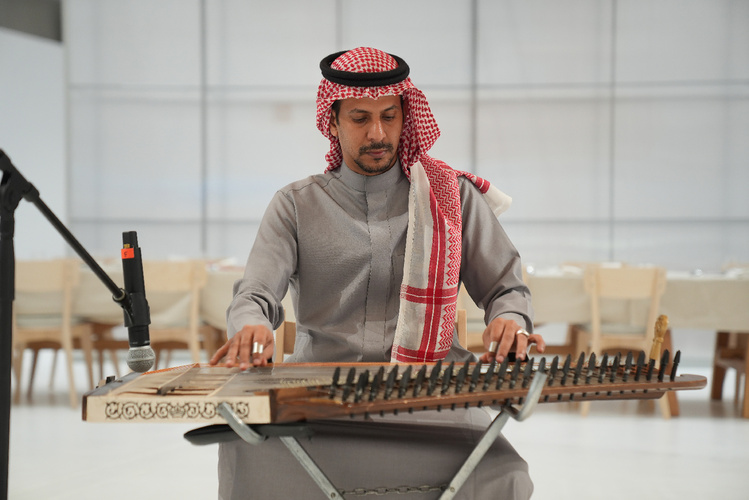
During the dinner guests listened to presentations by Professor Lucy Orta, Dr. Ahmed Alghamdi (NCVC), and Professor Ute Meta Bauer (Biennale Artistic Director), and a musical performance on a traditional stringed qanoon. The menu, created in collaboration with Chef Hissa Al-Huthaili (Suhail), paid homage to local culinary heritage and seasonal ingredients, weaving together food, art, and storytelling in a shared gesture of conviviality.